by Annie Carlson
Throughout history, humanity has seen many efforts to ban, burn, and restrict literature. Gutenberg’s printing press was reviled by the Catholic Church, The Handmaid’s Tale was (and is) reviled by Fundamentalist groups, and now This Book is Gay is reviled by far-right conservatives. These efforts stem from fear, want for power, and a lack of critical thinking. People rally behind a “think of the children” narrative, aligning literature and education with danger. The true danger exists in our inability and unwillingness to be critical of each other and ourselves. We need books. The invention of writing is fundamental to our humanity, and control of art means control of us. The idea of literature being dangerous has been and is currently a simple path to power. In response, we must fight censorship, think critically, and protect our freedom to read.
A common cry of organizations that ban books is “think of the children!” This is why we see book bans start in schools; it’s easy to rally support when you have an innocent child to “protect.” This claim goes hand in hand with the perceived danger of books. Conservative banning groups consistently claim that books about LGBTQ+ people contain sexual content, continuing a tradition of hypersexualization of this group and subsequent censorship of their lives that goes back to the Hayes Code. A report by PEN America states, “[T]he term “obscenity” is being stretched in unrecognizable ways because the concept itself is widely accepted as grounds for limiting access to content. But many of the materials now being removed under the guise of obscenity bear no relation to the sexually explicit…” And again in the same report: “Some (banned books) contain nothing more ‘obscene’ than the mere suggestion of a same-sex couple in an illustration…” (“Banned in the USA”). Another common target are books about people of color or racism, which often contain nothing more harmful than the books about their white counterparts. These are tricky subjects with years of bigotry and emotion behind them, and that is why we have to teach our children about them. Not only are these subjects entirely safe for children, they are necessary. People who claim that books should be banned are hiding from the reality of our world and harming future generations in the process.
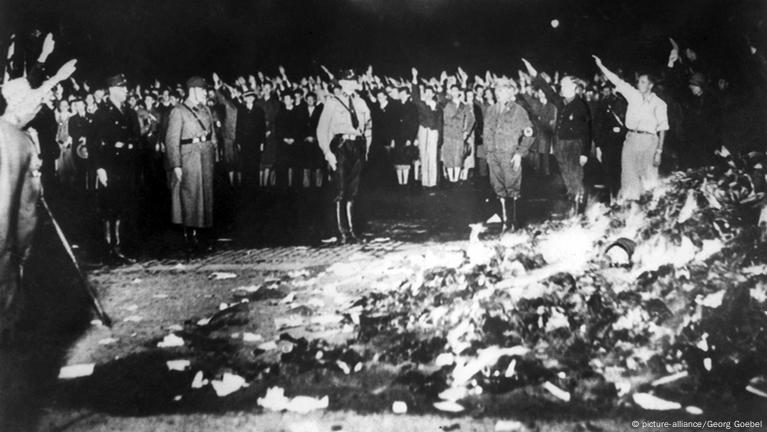
So why do these organizations fight so hard to ban books? The simple answer is control. Historically, books have symbolized knowledge that differs from a norm. The Catholic Church has often been guilty of trying to control the spread of religious literature – including the Bible itself – to stop people from beginning to read and think for themselves. We see this control of literature again during World War II: “1933: A series of massive bonfires in Nazi Germany burned thousands of books written by Jews, communists, and others.” (Freedom to Read, “Bannings and Burnings in History”). This burning was a symbol of the control the Nazi Party exercised over the people of Germany, and the removal of free thought that was also seen in schools and people’s minds. There is a reason that powerful organizations target literature to gain or maintain control. Books represent the individual ideas of humankind, contained in a way anyone can access. Ideas that disagree with the rhetoric of the powerful must be controlled; and any individual thought will eventually lead to destabilization. We see the fear this brings up for authors like George Orwell and Ray Bradbury in their seminal works. In Fahrenheit 451, Bradbury describes a future in which the government uses addiction to nonsensical, easily digestible information to stop their citizens criticizing their actions. Books are burned, and those with ideas from books are burned. In Orwell’s 1984, the totalitarian regime of Big Brother literally rewrites history all day, every day. People caught writing, reading, or talking about their ideas are tortured. Language is being slowly erased to only include terms the government wants people to have words for. This is a common theme in post-World-War-II literature. These master authors see the correlation between writing and control. They demonstrate how the cycle of censorship erases everything and creates totalitarian control. Groups that seek to gain control always start with our art.
In the aforementioned Fahrenheit 451, Bradbury often discusses the concept of quality. In a discussion with Montag, his mentor figure, Faber, says: “So now do you see why books are hated and feared? They show the pores in the face of life. The comfortable people want only wax moon faces, poreless, hairless, expressionless.” (Bradbury 79). This is one of Bradbury’s great observations about humanity; our regressive want to not see the difficult things about our world. That is where our hatred and fear of art stems from – an unwillingness and inability to think about where we have gone wrong. Art shows us each other and ourselves in all of our inadequacies, all of our ugliness. Our society teaches us that art should be exempt from criticism, but that is the most important part of art – the ability to be skeptical and critical is vital to art and life. Brad Dress, reporting for The Hill, noted that to control progress, discussion must be controlled: “Some Republican-led states have also banned the teaching of other topics and ideas like critical race theory…” Actions like this, as discussed before, seek to take away discussions of difficult topics that paint us as humans – or worse, the US government – in a bad light. We see a similar idea from a more progressive perspective in a Washington state school district which, The New York Times reported, “voted to remove ‘To Kill a Mockingbird…’ from the ninth-grade curriculum at the request of staff members. Their objections included arguments that the novel marginalized characters of color, celebrated ‘white saviorhood’ and used racial slurs dozens of times without addressing their derogatory nature.” (Harris, Elizabeth A. and Alter, Alexandra) This book does include all of those aspects, but a reader who is allowed to criticize and think about the novel will realize that those things are unacceptable. Removing this book will not remove the centuries of very real discrimination that African Americans have faced. It will only remove valuable discussion of this history, and a chance for children to learn not to take everything they see at face value. Books are only one piece of the larger picture of reading. The reader is meant to leave the book, think about what it says, and come back to listen again. This is why literature is important: not just as a bastion of knowledge, but as a path to understanding each other and ourselves.
Our art is incredibly important. We use it to tell stories, share knowledge, and disseminate ideas. Real understanding of art means the ability to be critical, which is a skill that the powerful do not want to encourage. Book bannings are a symptom of this, and they are undemocratic and immoral. We have to trust each other and ourselves to come to our own conclusions. Not allowing access to the tool of communication that art is leads to the death of critical thought. We owe it to each other to not accept the easy, happy path: to seek out difficult questions and deeper understanding. Art is a microcosm, a tiny piece of what it means to be human. It must be protected and understood.
Where we burn books, we also burn people.
 The Talon
Leave a comment