By Evan Lande
All over the world in places like Nepal, social media is being banned or put under stricter regulation by governments. Because of these bans, citizens, often led by Gen Z organizers, are protesting.
In the case of Nepal, citizens started a revolution and burned down their Capitol.
The reason for these protests was a growing sense of social media bans being controlling and authoritarian acts, as well as general anger surrounding the economy and corruption. In a Reuters interview, a protest organizer was asked why they were protesting. He answered, “All the Nepal citizens are fed up of corruption. Every youth are going outside the country. So, we want to protect our youth and make the country’s economy better.”
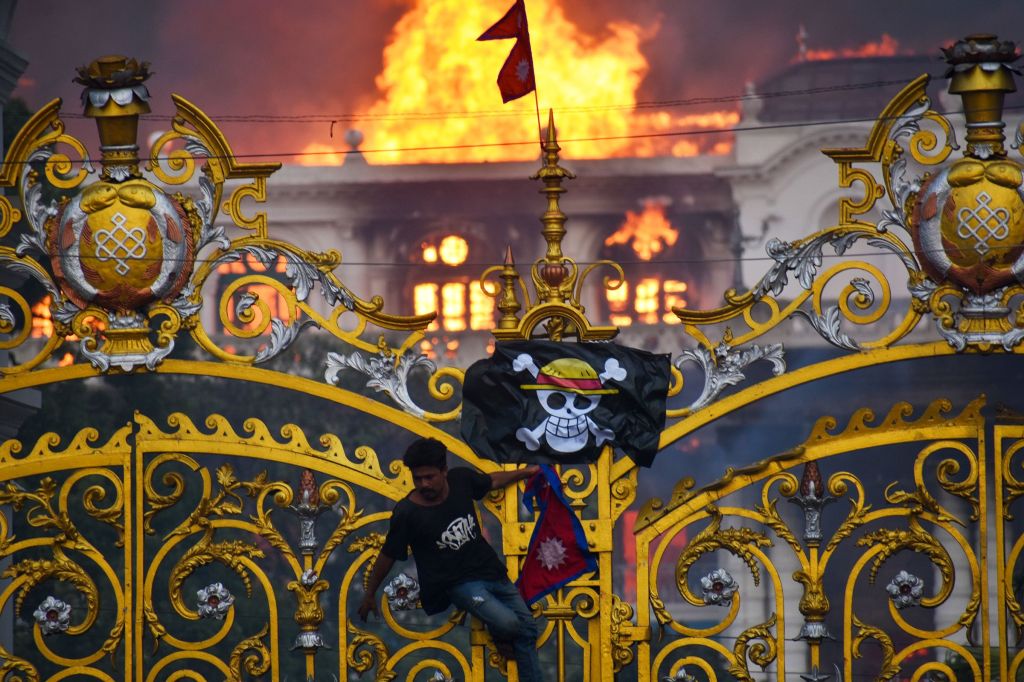
In September, when protestors in Nepal destroyed their Capitol, they raised a flag depicting a skull and crossbones wearing a straw hat. This flag is widely known from the series One Piece, a popular animated TV show based on a manga series. This flag is symbolic of the main character of the show and his “quest to chase his dreams, liberate oppressed people, and fight the autocratic World Government,” according to CNN. Because anime is important to youth culture in Nepal, leaders of the protests have adopted this symbol to allow Gen Z to connect with the movement. It has been used throughout other parts of southern Asia, as well as France. It is also quite ironic, as Nepal’s government had banned apps which have One Piece available for streaming, and a few days later the Capitol was burned down, with the straw hat flag as the symbol of the rebellion.
As for what American members of Gen Z think, Leyner Manon said, “Banning social media can be good and bad. People can be more productive without it, but less entertained. I have to say, though, the bad of banning or restricting social media outweighs the good, because it removes the way of meeting new people and connecting to others that we have gotten used to in the age of the internet.”
This isn’t only happening in Nepal. In places like the United Kingdom, you need a verified ID to access certain things on the internet. The UK did this to protect children from viewing certain websites that may contain harmful content. Although it was well-intentioned, it caused a bunch of outrage from people who didn’t want to show their IDs to prove that they are over 18. People protested on the streets, and many downloaded VPNs (Virtual Private Networks, which can be used to change one’s digital location) to avoid needing to use an ID to access certain things on the internet.
Starting in December, Australia’s new bill banning social media apps for everyone under the age of 16 will go into effect. The platforms included in the ban are: Youtube, Tiktok, Instagram, X/Twitter, Facebook, Snapchat, Reddit, Kick, Twitch, and Threads.
With all of these new regulations being put into place, it seems that the world is more divided than ever on this issue.
One side claims that bans and regulations are for the safety of citizens, particularly minors, but the other side argues that this infringes on their civil rights, and could be interpreted as suppression of information and censorship.
One thing is for certain: citizens of any country should have the right to protest freely and without interference from their government. Nepal’s government and security forces violated international law surrounding freedom of speech several times, resulting in protestors being murdered. Those responsible must be held accountable, and the corruption and censorship running rampant in Nepal must end.
Through these events, we are witnessing Gen Z stand up for those fundamental rights of every human. We have to remember; dissent is vital.
 The Talon
Leave a comment