by Claire Kim
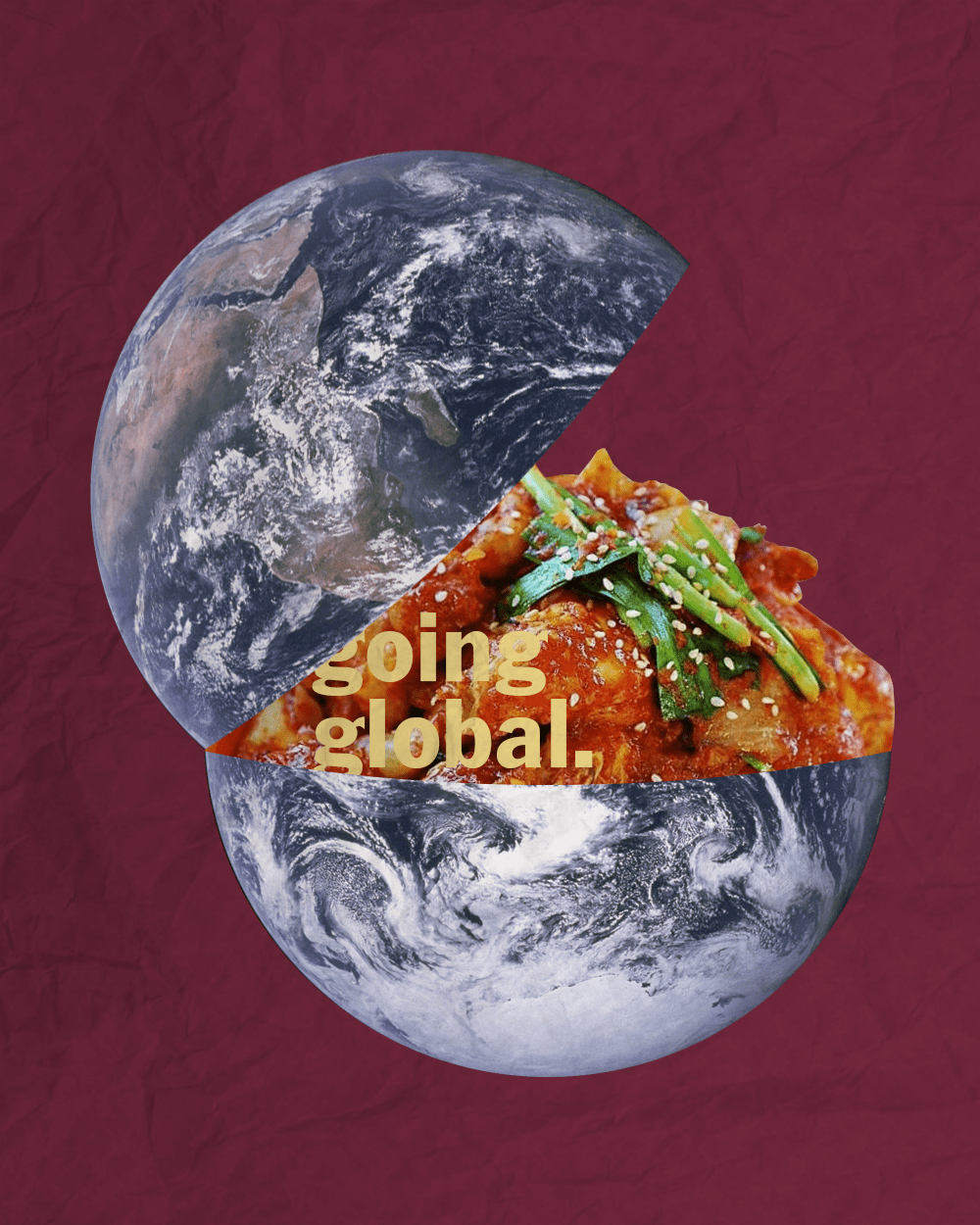
What if I told you that the way you dress, the music you listen to, and even the food you crave might not be entirely your own choices? We live in a world that feels more connected than ever – but what if that connection is quietly making everything the same? In today’s globalized society, the constant exchange of ideas and trends shapes what we see as normal, often without us even realizing. As we are a society active on social media, we’re often given simplified and curated versions of cultures that are enough to recognize, but hardly enough to understand and appreciate. In turn, this creates a growing disconnect where society is more passive and less motivated to engage with cultures beyond their own. As a result, important practices and cultures are being assimilated into the Western push, and this is hurting the traditions that many families hold.
Western influence and globalization are threatening local traditional practices and cultures. It is eroding local customs and diminishing cultural diversity around the world.
Globalization is defined as “the process by which increasing interaction and integration among countries, cultures, economics, and political systems”. In the modern world, globalization has become a powerful and natural force shaping everyday life in ways that often may go unnoticed. The pizzas, sushi, and tacos you love? Globalization made that possible. A job in multinational corporations that allows you to work and collaborate across continents, or a new show or song you love that’s of a different language? Globalization did that. Through the rapid exchange of goods, ideas, and media, cultures are no longer confined to geographical boundaries, and it opens new opportunities that allow traditions and innovations to reach audiences on the global stage. However, even as these connections deepen, the flow of culture isn’t always equal, and recently, globalization has begun to have a negative impact on non-American cultures.
The dominance of Western media and values often establish a global standard, influencing what is seen as popular or desirable, which can and has eroded local traditional cultures. Cultures around the world may feel the pressure to adapt and reshape their identities to align with the expectations of the West. As an effect, things seen as unique can become standardized, as cultural expressions are modified to appeal to broader, often Western audiences.
Globalization as a topic is super nuanced in modern life. It can be helpful, but over time, it can lead to the gradual erosion of cultural authenticity, where distinct suits of culture can be softened into a uniform, Western culture. It contributes to instances where dominant cultures impose their values and media onto minority groups’ cultures, which risks the loss of their traditions and languages. When cultures evolve under global influence, are they truly being shared respectively – or subtly changed? How can we be comfortable with thinking and living stagnant in an ever changing world?
One example that is particularly important and close to me is the erosion of traditional Korean culture. Through social media, Korean music all the way to Korean skincare has influenced many new Western products and collaborations. However, the Westernization of these ideals and customs are partially alarming. The Korean Wave, also known as Hallyu, has reshaped perceptions of South Korean culture and its identity. The impact of the Korean Wave is evident in the commercialization of the culture – the rise of Korean-themed products and the number of foreign learners has increased rapidly. Kpop itself is a multi-billion dollar industry, and the promotion of Korean culture is a matter of national significance and pride for Seoul. Hallyu related products and services have generated more than 14.6 billion dollars in exports in 2024. You’ve definitely heard of Gangnam Style and Kpop Demon Hunters which are two important examples of the spread of Korean culture and music. In turn, Korean cultural touchstones are adopting more western elements. Westernization of the industry is prominent especially in the surge of English lyrics in Korean songs . This hybridization, although promotes international access and understanding, it raises concerns about the preservation of the original Korean cultural identity. How well is the traditional culture represented in these globally popular industries and projects?
When asked about how interviewees thought that social media had affected Korean culture identity, 100 percent of respondents said that it has been changed to appeal to more western appeals. One respondent said that they believed that social media can limit people’s views to one thing. They expanded by saying, “I believe that it’s probably a good thing that people are interested in other cultures, however social media can alter and shape their views to not see the whole perspective.” Another respondent shared a similar experience, and stated that they believe that other traditional cultures such as her traditional Chinese New Year has been changed as a western interpretation and doesn’t show the actual traditions of Chinese culture. She continued by saying that she thinks that social media has generalized many cultures, especially Asian traditions. Through the interviews, the lack of knowledge on cultures is prevalent, and I noticed the importance of preserving traditional cultures and increasing learning. Many don’t know at all or only things from social media about cultures and traditions other than their own.
So, realistically, how can we address this growing lack of cultural understanding in an age of rapid globalization – and why should it matter to us as high school students? How can we decrease the assimilation and erosion of certain cultures? Many teens may believe that it doesn’t affect them because they are already immersed in a Westernized environment that likely feels “normal”. Consequently, that is the impact. When we consume the same media and follow the same trends, we as students accept a limited view of the world. Changing our views doesn’t require huge actions, but requires intentional action. It can be as simple as choosing differently – engaging with media from other cultures, attending cultural events, joining diverse clubs, or having real conversations with people whose experiences differ vastly from your own. Additionally, adopting and cultivating an open mindset allows us to approach new experiences without preconceived notions or judgements. We can achieve this through seeking diverse environments and normalizing curiosity. Direct engagement with others and their culture encourages empathy and compassion, learning firsthand about other’s challenges and experiences. If we stay comfortable in what we already know, we become passive participants in the loss of cultural diversity. Finding a healthy balance between global and local influences and ensuring that cultural heritage remains resilient, we can keep traditions and cultures alive. We need to find a willingness to learn and embrace other cultures in order to evolve from the mundanity of Westernized lives.
Many reiterate and emphasize that the globalization of traditions and cultures isn’t a bad thing and benefits far greater than we think. And in some cases, that’s true. It is a way that cultures around the world can reach more people, informing and educating them. As technology has advanced, it can serve as a platform for cultural revitalization and preservation, only when done correctly. In turn, when met by global spread influenced by Western ideals, traditional cultures have the threat of being severely eroded. The economization of culture has led to the loss of cultural identity. A study I read shows that this is especially evident in the spread of global consumer products and entertainment, which often promote Western values of individualism and materialism, in contrast to the communal and traditional values of many local cultures.
For instance, in Costa Rica, the tourism industry has been shown to have commodified local traditions to fit Western ideals and culture for foreign consumption, turning cultural practices into performances rather than an expression for identity. In China, the growth of social media platforms for younger children has seen an increase in the diffusion of Western traditions, at the expense of traditional values. This causes the younger generation to distance themselves from their native cultural heritage.
Change is difficult. Opening your mind is difficult. Exposing yourself to unfamiliar experiences is difficult. Facing new ideas is difficult. Learning it itself is difficult. But I believe that difficulty is not an excuse to remain stagnant. In a fast-moving world shaped by globalization, choosing comfort over curiosity means that we’re allowing cultures to fade into the background of everything that is too familiar and mundane. As high school students, we are not as removed from this issue as we may think; we are active participants in choosing what we consume, what we ignore, and what we choose to value. The question is no longer about if globalization is happening, but is how we will choose to respond to it. Will we continue to passively accept a narrow perspective of the world, or can we make the effort to seek out, understand, and preserve what makes cultures truly unique? Change may be difficult, but so is losing what makes our world diverse. To decide what we value, the challenge or the consequence, is our choice.
 The Talon
Leave a comment