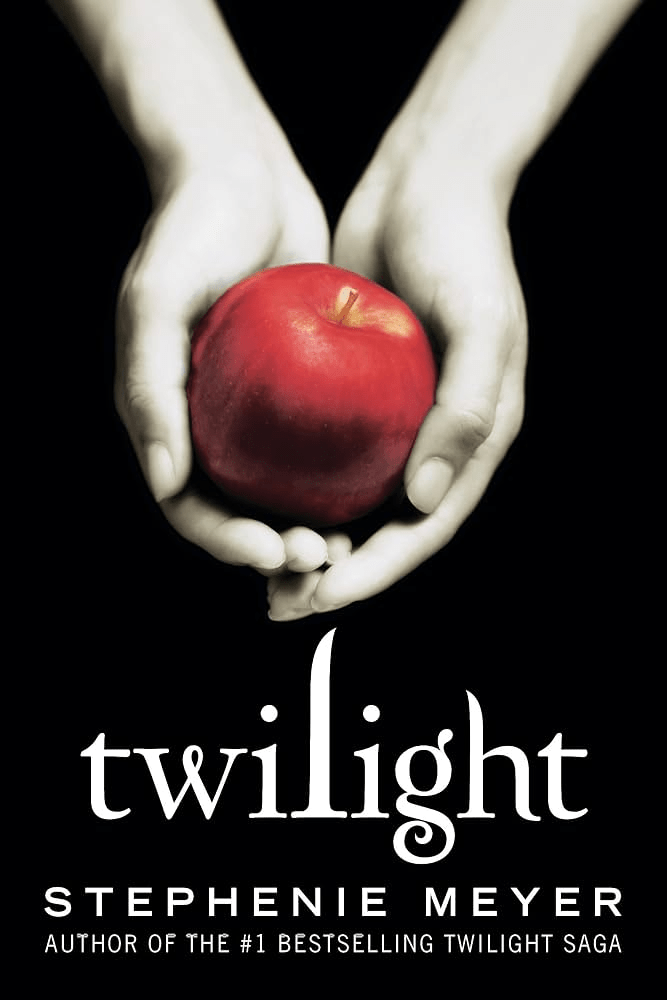
by Annie Carlson
There’s a strange phenomenon I experience every time I’m asked what my favorite _____ is. When I love something, I dig my heels in. It becomes a part of me. But I can never remember the list of things I like when I’m asked. I had to decide that, when prompted, I would answer that my favorite color was blue. I have to make and memorize lists of things I like. Something about this question melts my brain – I think it’s because I love too hard.
My list goes something like this:
Favorite book – 1984 or A Handmaid’s Tale
Favorite musical artist(s) – Stevie Nicks (Fleetwood Mac), Blondie, Simon and Garfunkel, the Violent Femmes, the Beatles
Favorite visual artist – William-Adoplhe Bouguereau
Favorite color – Blue
Favorite movie – Twilight (2008)
That last one usually gets me some strange looks. Especially because of the way I present myself to the world; unapologetically political, occasionally hypercritical, accidentally pretentious.
But unlike many of my ilk, I love Twilight. It’s the only piece of media that never ceases to fascinate me, because people feel so many feelings about it. When the books first came out, they were pretty immediately very popular. To many teens of the era, they seemed to represent something that they’d all been feeling. Something about the melancholy and melodrama spoke to them. It was just enough abstinence metaphor and incoherent rambling of a teenage girl to drive it to commercial success, becoming a New York Times bestseller within a month of its release. But the movie was the real beginning of the story. Directed by Catherine Hardwicke, the movie made $407 million during its release. It went supernova. And of course, the discourse began.
My first exposure to the Saga was through Parks and Recreation. The irreverent comedy series referenced the Twilight Saga as most programs did; as trashy, made for people who love to turn their brains off and drool over hot men. But my favorite character, April, a self-assured, unapologetically weird young woman, also got sucked into the blue filter. It was probably supposed to be because of her vaguely vampirish behavior. But I like to imagine that she saw what I did: a hidden message about humanity within the melodrama.
I read the first book in sixth grade. It was thoroughly boring. All of my theories about things that were being alluded to turned out wrong, and the real story was far less interesting. I remember thinking that Edward was a creep, and really needed to stop breaking into this girl’s house. I was team Jacob, even though he was barely a character and hadn’t had his glow up yet, and I didn’t really like Bella enough to ‘ship’ her with anyone. So I didn’t read the other books (and I never will). But it stayed in the back of my mind, dormant.
In the following year, I discovered the world of video essays. And I was hooked. I watched plot summary after plot summary, hundreds of chopped up clips and hours of deep analysis. I learned my favorite fact to disturb the masses: the infamous erotica series Fifty Shades of Grey began as Twilight fanfiction. On fanfiction.net. Under the name ‘Snowqueens Icedragon.’ And the similarities are not well disguised.
One of my greatest fascinations is the backlash and vitriol Twilight faced during the height of its popularity. Why did people feel so strongly about this? Plenty of terrible movies come out every year, and we all move on. But something about Twilight was so tempting to make fun of; honestly, I think that a big part of what is so genius about Hardwicke’s directing is the clear self-awareness she brought to the first film, making it something that people wanted to talk about.
When the movie became a phenomenon, people all over the world began to point and laugh at the stupid sparkle vampires. After all, isn’t it so much easier to make fun of something if its primary demographic is young girls? Even though this movie was making millions of dollars for the men at the top of the production companies, it was something to be immediately scorned and passed off as a fluke because of its target demographic. It was just another way to display our culture’s hatred of women, and to ingrain the fact that you can never be the ‘right’ kind of woman in a patriarchal world; even if your source of escapism is projecting yourself onto an insecure, virginal, heterosexual white couple.
Of course, the books are actual hot garbage. They hold very little literary value. But that’s not the point! It was never the point. This series is the greatest tool we have to see into the mind of a genius – and that’s what Stephenie Meyer is; a mad genius.
Twilight began as a dream. Stephenie describes a dream about a beautiful, sparkling vampire in a meadow, and her waking up to begin working on the first book. Part of what makes it so appealing to teenagers is the angst and underdeveloped adolescent thoughts that Stephenie imbues her books with. I think that the specific concoction of controlling religion, misogyny, racism, and guilelessness that has deep fried her brain makes for one of the best views we have into the mind of the middle-aged white suburban American mother. This same kind of longing and restraint struck a chord with adolescent audiences. The fact that people who saw themselves in Bella had two hot magical men to choose from also helped spur emotional attachments and fandom around debating Bella’s options. Team Edward VS Team Jacob created something to argue about, and something to make fun of other people for. Personally, I’m Team Therapy.
It is true that the fanbase being primarily young women made the franchise an easy target. But the Twilight hate is not just misogyny. There are hundreds of real concerns that should be addressed when the series is discussed. These include (but are certainly not limited to): dangerous portrayals of abusive, unhealthy, imbalanced relationships for teenagers, racism (which somehow we all just decided to forget about?), strange ideas about sex and relationships in general, improper use of historical relativism, oh look its more racism, vampire baby?, oh no the brown man is now being a pedophile, oh but it’s okay because Stephenie Meyer is a Mormon and has no idea that being in love with a baby is weird, no plot, no vampire lore consistency, improper use of Italians, jorts, his ejaculate is made of what?, of venom you say?, oh, that’s nice honey.
When the first movie was being made, my bestie, Catherine Hardwicke, was trying to cast more diverse actors, but Stephenie Meyer fought her the whole way. Meyer also describes a part of the process of transforming into a ‘flawless’ vampire as leaching all melanin from the skin. Michael Jackson skin-bleaching style. She insisted that all of the vampires needed to be portrayed by pale-skinned actors. Eventually, she was allowed to cast Laurent (one of the main villains) and two of Bella’s chronically ignored school friends as people of color. But Jacob, a character who was actually written to be a member of the (very real) Quileute nation, was portrayed by a white actor. By Sharkboy, of all people. In a horrible wig. And jorts.
Somehow it has escaped many audiences that the only minority community is shown as uncivilized animals who only serve as plot devices for the white characters. The Quileute Nation’s tribal history was used as a loose base for Meyer’s vampire/werewolf lore, but without any actual credit or heed paid to the real stories. Instead, the Quileute are portrayed as strange and alien, occasionally violent, hypersexual, unfair to the white vampires, and get the absolute worst piece of lore assigned to them – imprinting. The tribe has also never been compensated for the misuse of their myths and history. And the jorts.
On top of this, Meyer fell into the Confederate Vampire trope, which I blame Anne Rice for. Jasper is supposed to have been a Major in the Confederate Army. And it’s never discussed beyond that. Instead, it’s supposed to be the reason he knows how to fight other vampires. And he’s proud of it. Yay!
Also, Bella sucks. She is painfully boring, stupid, and passive. Her one clear motivation is to get freaky with Edward and become immortal. She rarely makes a choice or has a conversation that is unrelated to Edward or Jacob. She’s a terrible role model for young girls. And yet, she feels so representative of them. The truth is, while this is obviously influenced by Meyer’s internalized misogyny, teenagers often are shallow and stupid. And they should get to be. Adolescence is meant to be a period of growth – which is part of what makes Bella’s transformation into a vampire straight out of high school existentially terrifying.
Edward and Bella, the pairing that eventually makes it out on top, only spend around 340 total days with each other before getting married. Generally, we can blame Mormonism and Bella’s want for that disco stick for this. But it also reveals the unrealistic and unhealthy nature of this relationship, which is portrayed as highly romantic and idyllic.
The fact of the matter is, Edward and Jacob are both horrible people. Edward has always been a creep. In Midnight Sun, the rewritten version of the first book from his perspective, he describes in great detail how he wants to kill everyone in the biology classroom where they first meet in order to drink Bella’s blood. He breaks into her bedroom repeatedly to watch her sleep, follows her around, and refuses to communicate with her at all. He withholds intimacy to get her to marry him, thinks and acts like he’s only interested in her because she’s an anomaly, and literally will not communicate to save his life. He is also 109 years old. And it shows.
Jacob is much more likeable. He has known Bella for years, and seems to genuinely care about her. However, in the third book, it is pretty clear that Meyer had realized this, and needed to assassinate his character so that Bella would choose her favorite white boy, Edward. Jacob forces himself on Bella in Eclipse, not once, but twice. This only adds to the problem Meyer has with hypersexualizing and dehumanizing the Native people in the books. Later, Jacob is made to fall in love with a baby. Thank you, Joseph Smith.
So, obviously, part of my love for this series stems from my love to hate. I love dissecting all of the things that are horrifying and ridiculous about the series. There’s plenty to dissect. But I also think that the movies are truly masterful, in some respects. The first film especially, because of Catherine Hardwicke’s understanding that this movie could not be allowed to take itself too seriously, is genuinely enjoyable at points. Then, after Hardwicke left the production, the good parts of the first movie disintegrated. It became too much like the books, which were hot garbage. But because of the foundation the first movie laid out, the following movies could be laughed at in the same way, even though they were not being ridiculous on purpose. That’s how we get Nessie and “lets face it, I am hotter than you.”
Stephenie Meyer is a madwoman. This series is, objectively, insane. She’s not a great writer, so she kept having to come up with explanations for things that don’t make any sense, which created this massive web of fan theories and little-known facts about Twilight that get crazier and crazier the deeper you go. And yet some teenagers in 2008 seemed to take it seriously, which is truly baffling. Its greatest strength lies in the fact that it is unserious, so why did we take it seriously for so long? Is it collective psychosis? Did people really get that distracted by Robert Pattinson’s jawline? Or did they know all along? Was it all a conspiracy to keep this incredible piece of art secret from the film bros?
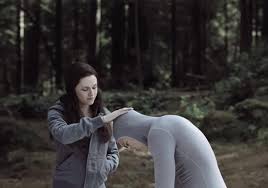
Part of it is definitely the community. The greatest thing about the internet is its ability to connect ideas; to connect people. Twilight had the good fortune of being born into an era where the internet was rapidly expanding. This connectedness allowed people to find each other and build community around things they loved. Twilight’s dedicated fanbase has the best and the worst of fandom – passion and creativity mixed with obsession and animosity. The general toxicity of the characters and Meyer’s bigotry certainly didn’t help. But still, this series was strange enough to attract a fanbase of weird little freaks, who turned it into something spectacular. I have a whole album of Twilight-related images on my phone because of them. (My favorite is one of Kristen Stewart petting Taylor Lautner in his CGI suit in a scene where Jacob was supposed to be in wolf-form.) Even though Meyer fought to keep it as heterosexual, white, and god-fearing as possible, people picked up on the weirdness inherent in it, and made it their own. People came together to figure out this puzzle, to be a part of this crazy thing. And now I can own a t-shirt that reads “This is the skin of a killer, Bella.”
It’s so enigmatic, this thing that was birthed from the mind of a Fundamentalist Christian who never got the chance to leave adolescence. I don’t think I’ll ever stop thinking about it, because that’s the thing about Twilight – there’s always more, lurking beneath the surface. It’s a window into this mind that I will never truly understand. I will never really know how we got from a dream about a disco vampire to creating a crime against nature. But that doesn’t stop any of us from asking, from theorizing, from thinking way too hard about it. There’s something about the combination of adolescent ridiculousness, campy nonsense, and insane worldbuilding that makes this abomination fascinating.
I think one of our worst instincts as humans is to see something popular and dumb and immediately think, “Ew, no.” To me, art is both a way of both changing the world and learning about it. Even though Twilight is mostly awful, it still says something about us. Humans like things for a reason; what does it say about us that this series was so deeply loved by so many people? And what does the fact that it was just as deeply hated by others say?
Every once in a while, the right concoction of nostalgia and Netflix deals results in a new wave of Twilight discourse. We drift back to it, moths to a flame. It holds our fascination in this very unique way; we’re all trying to parse the mystery of why it was so huge, why it meant so much to so many. We see it with hindsight, and each time it feels like uncovering a new layer of absurdity that is nevertheless still very enjoyable.
When I first admitted to my fascination with Twilight, I made sure to hide it under the veneer of, “I like to make fun of it; I like the criticism.” I had to intellectualize it to make myself feel better. But over the years, I have realized that this way of thinking is disrespectful to the people who really loved this series, who saw themselves reflected back like Bella’s nightmare of herself as an old woman. It’s the ultimate pitfall of the patriarchy; in trying to be true to yourself and fight against stereotypes, you often end up hating other women for being closer to the ‘right’ kind of woman. The reality is, calling other women stupid for being ‘feminine,’ for liking romance and drama, is just as misogynistic as boys calling you weird because your favorite color was blue. We’re so much more similar than we are different. Division and disdain are tools of the patriarchy – they don’t get us anywhere.
I don’t like the romance in Twilight. I like the ridiculous plot points and insane line deliveries, the overanalysis and the philosophical implications. But that doesn’t mean that the women who found a part of themselves under the blue filter are stupid, or wrong. It’s an act of feminism, to understand that criticism and ridicule are not the only value Twilight holds. It’s worth understanding why so many people saw themselves in it.
This is why Twilight (2008) is my favorite movie. Not because of the story. Not because I want to point and laugh and make fun of other women for liking something. But because it means something to all of us.
Yes, the Twilight Saga is stupid. But it’s still art, and it still means something to so many people. It makes us think, feel, create. Why not let yourself enjoy it?
I give the Twilight Saga 4.9/5 Stars. (Minus 0.1 for not ending with everyone getting brutally murdered, like Alice’s vision shows.)


Leave a Reply